DJ K isn’t producing anymore. He’s doing witchcraft.
The São Paulo baile funk producer and bruxaria pioneer calls for ear-rupturing revolution on his sophomore album Radio Libertadora!.



 DJ K. Photo by Felipe Larozza
Apollo Frequencies is a series exploring sounds that seem to come from another world.
Hearing the music of DJ K is like stepping into a bright, noisy room while still trapped in the afterglow of a flash-bang grenade. The 24-year-old Diadema, São Paulo native born Kaique Vieira is responsible for a strain of baile funk known as bruxaria (witchcraft), an unholy union of funk mandelão’s threadbare rave beats with whatever you hear in your worst nightmares. At its root is the “tuin” — an obliterating, high-pitched buzz designed to put you in the mind state of someone who has just inhaled lança, the drug of choice at the favela street parties known as bailes.
K quickly made a name for himself as a regular DJ at the Baile do Helipa in Heliópolis, São Paulo’s most populous favela. And in 2023, the internationally renowned Ugandan record label Nyege Nyege reached out about a record deal. The resulting album, recorded over the course of three days, was Pânico No Submundo, a 43-minute aural assault and psychological siege, unrelenting from either angle. The project was inspired by pandemic-era social unrest, and this atmosphere “prevailed in the sounds of the album, showing that we were on the brink of collapse,” K tells me. “It was meant as a cry for help, and I sweated on all the songs.”
K’s new album Radio Libertadora! tones down the horror in favor of a call for revolution. It begins with a 1969 clip of a radio speech by guerrilla revolutionary Carlos Marighella, followed by a loop of a female broadcaster calling for the end of military dictatorship. Chaos continues to reign in K’s heart, but he’s attempting to channel it now, in service of a greater goal.
Still, the overwhelming aesthetic of Radio Libertadora! is that of putaria — the wild, unrepressed sexuality that courses through all great baile funk. Over email, K and I discussed putaria, bruxaria, and American misconceptions about Brazilian music.
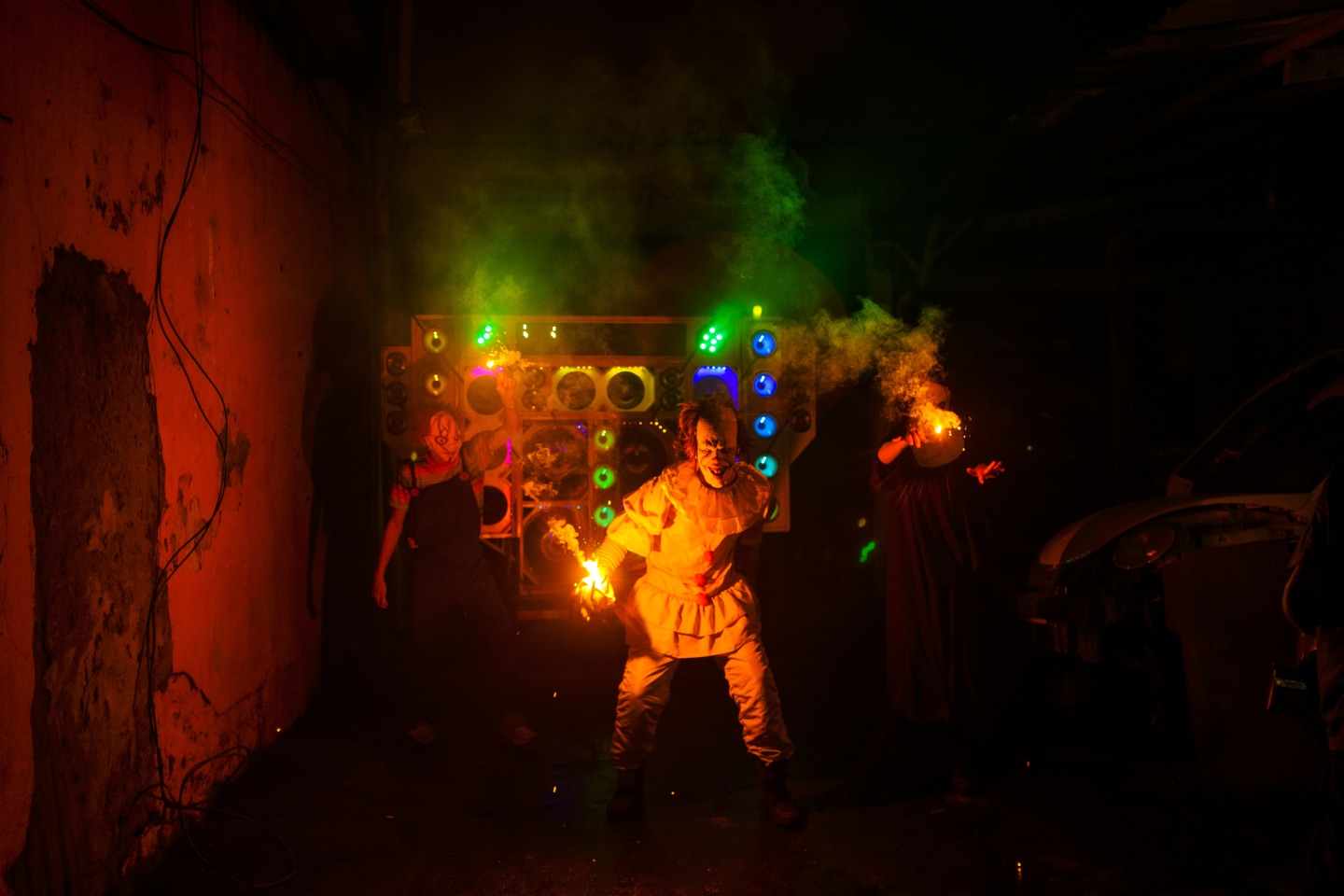 Still from Terror Mandelão. Photo by Felipe Larozza.
My last album was a cry for help. This one is a cry for freedom.
Beyond literal witchcraft, what does bruxaria mean to you?
Bruxaria is simply my originality — combining genres like rock, movie soundtracks, and elements that evoke mental chaos and create an impact on listeners. Bruxaria existed long before anyone really knew about it; I have videos from 2019–2020 where I was already playing this type of music. My signature tag — “DJ K não está mais produzindo, tá fazendo bruxaria” (“DJ K isn’t producing anymore, he’s doing witchcraft”) — marks the song as mine, and people know what to expect. It started as a joke between friends in the studio, but it became huge.
You’ve said you made Pânico No Submundo in three days after Nyege Nyege asked you for an album. I imagine you took more time with Radio Libertadora. How was the process different this time around?
I made Radio Libertadora in two or three months. I focused on subconsciously delivering a message of freedom, even with the songs talking about sex, putaría, and crime. The album includes quotes from revolutionaries and Brazilian rap groups to reflect the fight for freedom from within the communities. Crafting the songs was a sensational experience, but the real impact is in the lyrics, which tell real stories from the favela. My last album was a cry for help. This one is a cry for freedom.
The album starts with a clip of Carlos Marighella calling for revolution against military dictatorship. Do you see Radio Libertadora as protest music?
The first track of Radio Libertadora begins with audio from a real Brazilian radio station that fought against the military dictatorship, informing the public how to act and protect themselves. The idea was to tie that history to today, not just in Brazil but globally, showing how radio once served as a tool for liberation and how we can still use it as a symbol of freedom and better living conditions.
Part of what’s so appealing about baile funk is that it feels completely lawless, so it makes sense that the Brazilian government has tried at times to criminalize it. Have those crackdowns affected your community, and how is your community fighting back?
Brazil has always repressed street funk parties, but today things are calmer in many places. People are beginning to accept funk more as a legitimate musical genre. It’s been claimed by the streets and represents young people who believe in a better life through being MCs, DJs, or just partygoers. Although repression still exists, things are improving.
The word “putaria,” which I understand can mean a few different things, comes up a lot on the album. What does it mean to you in the context of Radio Libertadora, and how does it relate to bruxaria?
Putaria is a key part of funk, whether in bruxaria or other styles. Among both young people and adults in Brazil, it’s very common to listen to songs that explicitly talk about sex, but the real focus is on the beats and the euphoria the lyrics bring. Talking about putaria became part of the culture within funk mandelão. There are lighter versions for those who don’t like explicit content, but it’s really about delivering euphoric, provocative energy. In the favelas, music with sexual themes dominates festivals and celebrations.
One thing I like about your production is the way you often move the classic baile funk backbeat around — from the kick drum to a synth, for instance. Do you ever feel limited by how specific to the genre that beat pattern is, or do you see it as a fun challenge to be as creative as you can with it?
I don’t see it as a limitation of my creativity. I really like making beats in this style because it's what drives the funk genre today. But I also make many other kinds of beats: 4/4, automotivo, Zona Norte, etc. On this album, I chose to keep my originality and highlight the aggressive, mind-disturbing beats where bruxaria funk was born.
I recently started listening to techno and trance [for inspiration], but I’ve always liked rave music’s euphoric feel, and I incorporate funk lyrics and effects into it to maintain the consistency of my original style. There’s a Brazilian genre called mega funk, which is basically slower techno with euphoric lyrics. It’s growing fast across Brazil and even reaching São Paulo.
 DJ K. Photo via publicist.
It’s hard for non-Portuguese speakers to appreciate baile funk at a lyrical level. Are there any lyrics on this album that stand out as your favorites?
My favorite track is the first one. I put everything I wanted to say into it, and it took the longest to make. When the MC sings, “De forma proibida nós mandamos a realidade” (“In a forbidden way, we deliver reality”)—that’s my favorite line of the whole album.
What have you learned from touring internationally about the way the world consumes Brazilian music?
After touring in Europe, I saw how much we are capable of and how much the world appreciates the music we make. It’s an honor to know that my taste, and the tastes of many Brazilian DJs, are being heard internationally and are leading to gigs. I had never even left my state before. Going abroad showed me the power we have to succeed on our own terms in the music world.
What’s one thing you wish non-Brazilians would stop getting wrong about baile funk?
For those who still don’t understand funk, the best thing is to stop looking at what the media shows and start seeing the real talents coming from the bottom, those who are the true roots of funk. Where I’m from, many underground artists are still fighting, with no money or space to build a millionaire career. A lot of people in Brazil exploit funk to make popstar media content and treat it like it’s the “real” thing. But the world — especially Europe and the U.S. — is finally beginning to understand what real funk is. When I played in California for Boiler Room, it shattered my assumptions. It showed me that people are really interested in what we create from a genuine place.
 DJ K. Photo by Felipe Larozza