HAVEN. vs. Jorja Smith: How “I Run” will shape AI music’s future
Tangled up in wires...


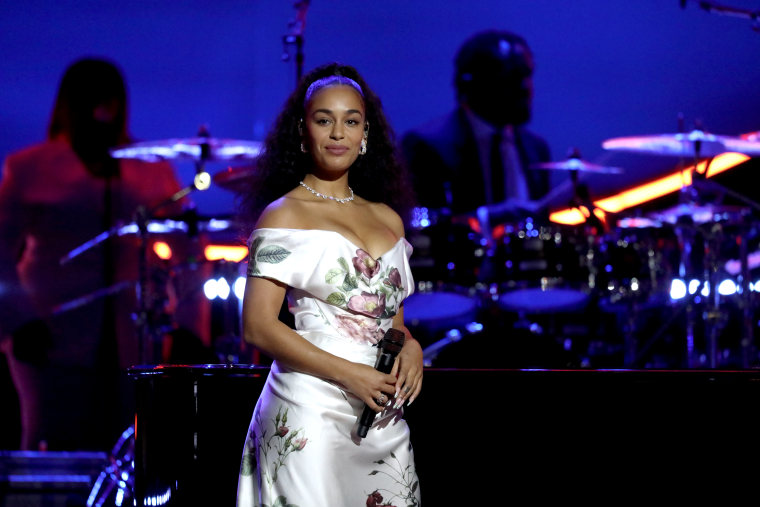 Photo by Tristan Fewings/Getty Images for Global Citizen
Jorja Smith and her record label FAMM have entered a legal dispute with HAVEN. (producers Harrison Walker and Jacob Donaghue), a U.K.-based dance pop artist project whose TikTok hit “I Run” has raised serious ethical and philosophical questions surrounding the politics of AI and music.
What's the deal with "I Run"?
FAMM alleges that HAVEN. producer Walker used AI tools to alter his voice to sound like Smith’s. Further, the label, which is independent and owned by Smith, shared that they believe that Smith’s catalog was used to train an AI to write the song’s lyrics and craft its topline melody. (Walker and Donaghue previously confirmed to Billboard that they used the AI tool Suno to “give their original vocal a female tone”).
The track was already gaining momentum on TikTok before it was released officially on October 10th with millions of plays on the platform. The song's vocal resemblance to Smith’s and the swirling questions surrounding its source prompted the British singer to make a since-deleted video where she clarified that the song is not her's, writing “it’s not meeeee” in the video's comments.
Around November 14, “I Run” was taken down from TikTok and streaming platforms after recording industry bodies deemed the song a violation of copyright and impersonation policies (stymieing the song from debuting on U.K. and U.S. charts). HAVEN. then re-recorded the track with a real human singer, Kaitlin Aragon.
The new version is now available to play on streaming platforms and use on TikTok.
What is Jorja Smith claiming?
Central to FAMM’s claim is that HAVEN. knowingly played into the public’s confusion around who was actually singing. HAVEN. used the hashtag #JorjaSmith to promote the song in TikTok videos. In multiple videos, Walker and Donaghue never deny whether it is Smith and instead seem to lean further into the public’s speculation that it was her. “It was more so just embracing that it does sound like her,” a spokesperson for HAVEN. told Billboard in their defense.
FAMM detailed their case on Instagram, where they stated that they wanted to have the conversation in public to encourage “public discourse” on these complex questions. They revealed that Walker and Donaghue's team reached out to Smith following the track’s virality, asking for a feature. FAMM claims the request proved HAVEN.’s need to “legitimize” the track following the already existing confusion.
The big picture
Beyond the question of how Smith and HAVEN. will end up negotiating their competing claims, the most nefarious reality this controversy illuminates is just how easily AI music tools are able deceive real humans. It's a glimpse into what our future will surely look like if AI continues on without restriction.
Algorithmic platforms like TikTok are fueled by engagement. AI now grants people the ability to easily create a song that sounds eerily similar to a popular artist— a move that can fuel hype and debate, and in turn, manifest virality.
Today, with current little industry protection and limited public understanding of AI music technology, all artists are at risk of being impersonated — and all normal people at the risk of being fooled. That’s also what happened around the 2023 AI song, “Heart On My Sleeve” that “featured” Drake and The Weeknd. The track generated millions of streams before eventually getting taken down by platforms.
The rise of this deceitful new marketing tactic provokes the more urgent question of how artists can protect and control their intellectual property.
Using someone’s work to train AI models is a much murkier question than sampling—another music copyright question that caused industry headaches in previous eras. As lawyers Jason M. Loring and Madison Gaines write about the phenomenon, “When AI systems learn from human artistic expression, they're not just processing data—they're absorbing the patterns made manifest in music.” Loring and Gaines distinguish AI tools from sampling because “when a human artist samples, they make conscious choices about meaning, context and artistic expression. When AI systems sample, it engages in pattern recognition and statistical recombination.”
Jack Harlow directly sampling Fergie’s “Glamorous” in “First Class,” for example, is much more straightforward to understand than if Harlow’s team had used Fergie to train an AI that helped Harlow craft a brand new song.
Sampling involves direct usage, sonic manipulation and copyright claims; AI training, on the other hand, is essentially a black box, where even the person generating it doesn’t necessarily understand the intricacies of how the AI software is extrapolating patterns from the source material. With AI models that scrape the internet, and “train” on millions and billions of other peoples’ material, the question of attribution becomes labyrinthian.
At the moment, the status quo seems to benefit artists like HAVEN. who can take advantage of the murky terrain and claim they are merely “using AI tools” to create their art, casting off anyone who has questions or concerns as luddites or close minded. Until there are clearer regulations and guardrails, the listening public, labels, and artists will continue to stand on shaky ground.
“AI technology is being trained on the labour and ingenuity of the very same creators it intends to replace without any due credit or compensation,” FAMM wrote on Instagram.
The next time you see an “unreleased” song by your favorite artist, it might be worth checking that it's not the robots taking your fav’s job.